




Cold Room vs Freezer Room: What are the differences?
 Jul 24, 2025|
 View:771
While both cold rooms and freezer rooms provide refrigerated storage, they serve distinct purposes based on temperature range, design requirements, and typical applications. Understanding these differences is crucial for selecting the right solution for your needs.
Key Differences:
Temperature Range:
Cold Room: Maintains temperatures above freezing, typically between +1°C and +15°C (34°F to 59°F).
Freezer Room: Maintains temperatures below freezing, typically ranging from -18°C to -30°C (0°F to -22°F) for long-term storage. Some might operate slightly warmer (e.g., -12°C for certain fish) or colder.
Primary Purpose:
Cold Room: Designed for chilling and short-to-medium term preservation of items that would be damaged by freezing. Slows down bacterial growth and enzymatic activity.
Freezer Room: Designed for freezing and long-term frozen storage. Stops bacterial growth and enzymatic activity entirely.
Typical Applications:
Cold Room:
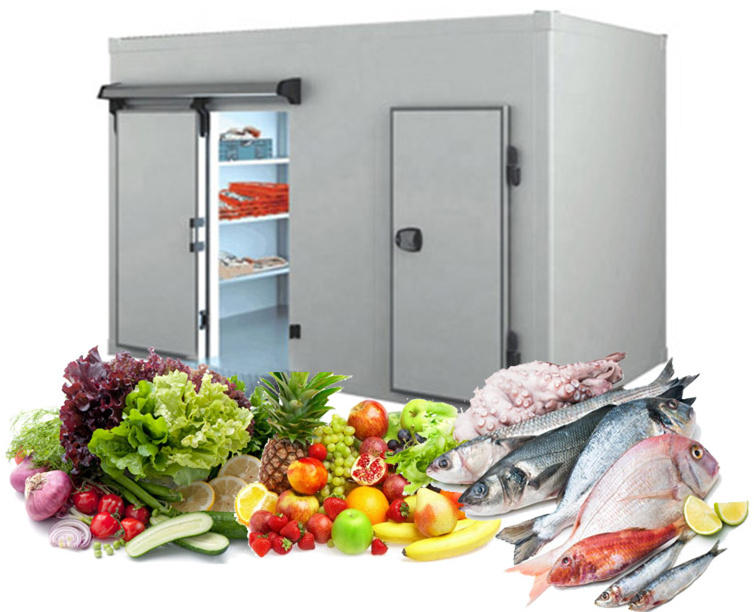
Fresh produce (fruits, vegetables, salad greens)
Dairy products (milk, cheese, yogurt)
Eggs
Beverages (water, soft drinks, beer, wine)
Some pharmaceuticals and flowers
Fresh meat/poultry/fish (short-term holding before freezing or sale)
Butter/lard storage rooms (~+10°C)
Freezer Room:
Frozen meats, poultry, and seafood
Frozen vegetables, fruits, and prepared meals (TV dinners, ice cream)
Bulk frozen goods for restaurants/institutions
Long-term storage of pre-frozen items
Humidity Control:
Cold Room: Requires higher humidity control (often 80-95%) to prevent dehydration and wilting of fresh produce.
Freezer Room: Humidity levels are inherently very low because the cold air cannot hold much moisture. Dehydration (freezer burn) occurs if packaging is inadequate, but active humidity control beyond refrigeration isn't typically needed.
Refrigeration System:
Cold Room: Uses a refrigeration system designed for positive temperatures. The compressor works against a smaller temperature differential (ambient to ~+4°C).
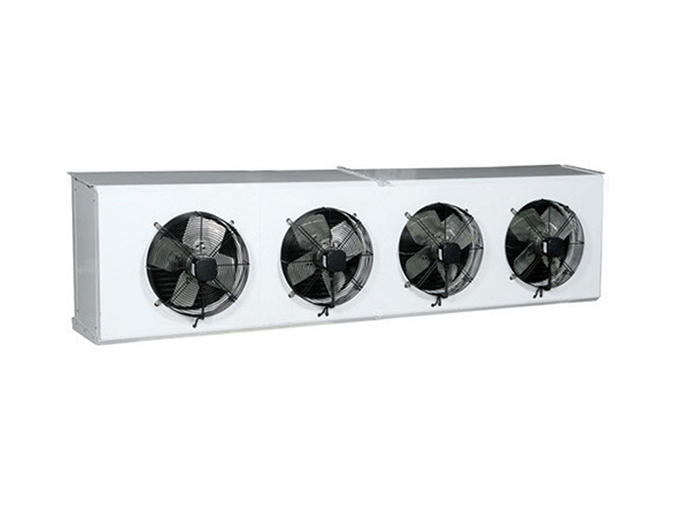
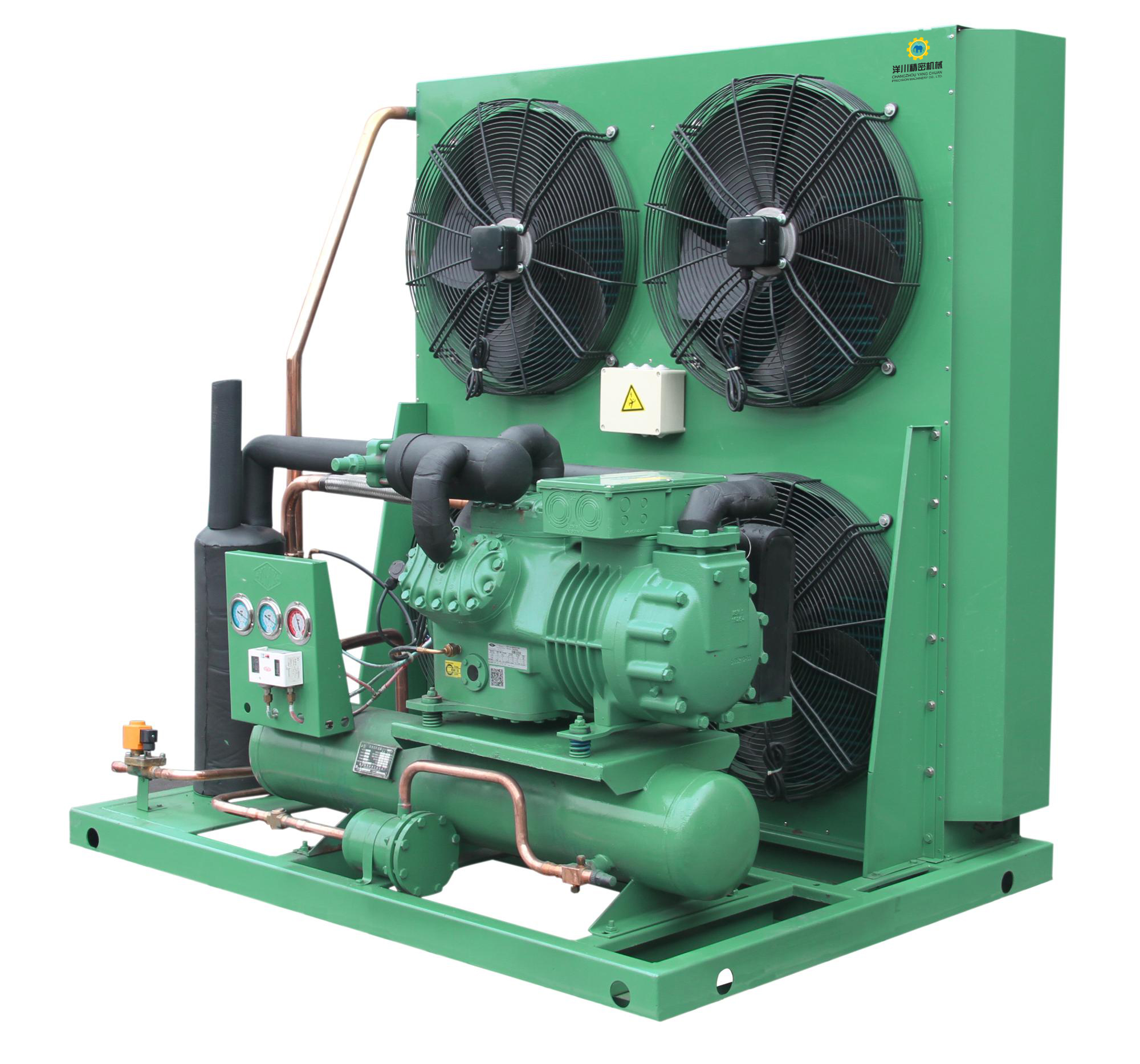
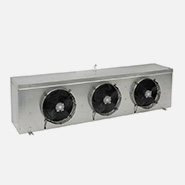
Freezer Room: Requires a more powerful refrigeration system designed to achieve and maintain sub-zero temperatures. The compressor works against a much larger temperature differential (ambient to -25°C), demanding higher capacity and often multi-stage compression. Defrost cycles (automatic or manual) are critical to remove ice buildup from evaporator coils.
Insulation Requirements:
Cold Room: Requires good insulation, but the lower temperature differential generally allows for slightly less extreme insulation values than freezers.
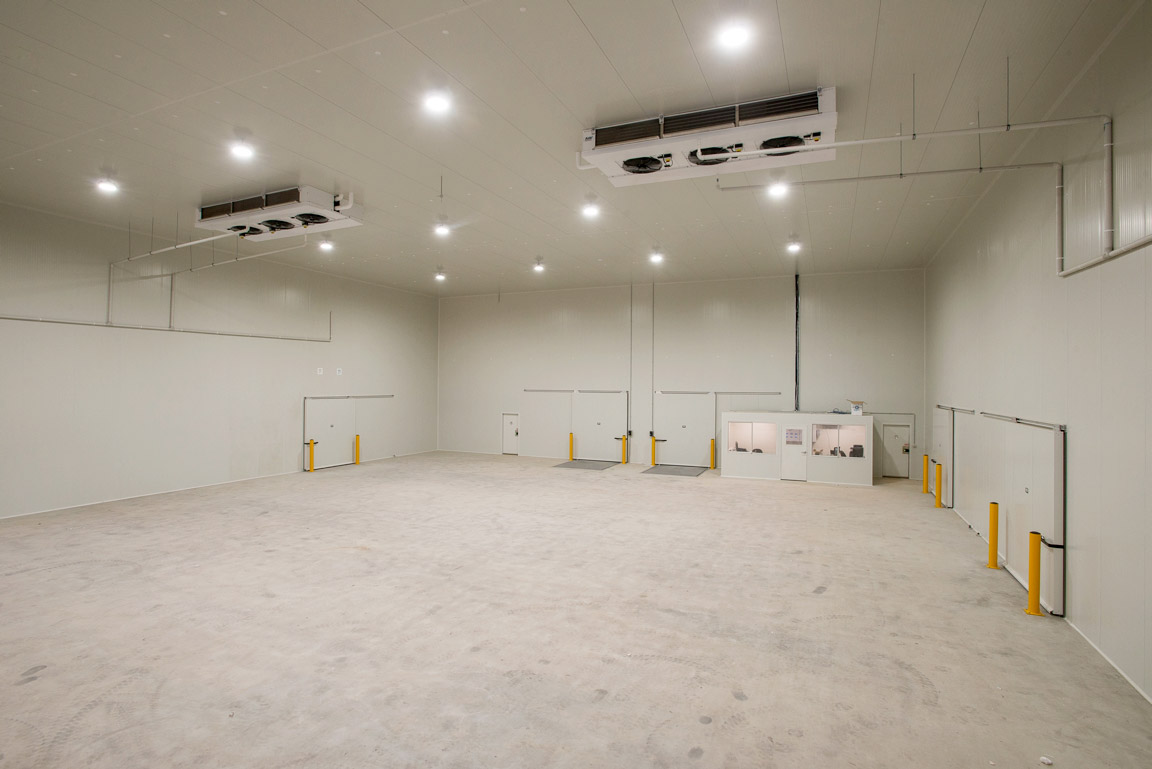
Freezer Room: Requires significantly higher insulation levels (greater thickness, higher R-value panels) to minimize heat transfer and maintain the low temperature efficiently. This is critical to reduce energy consumption and prevent warm spots.
Door Design:
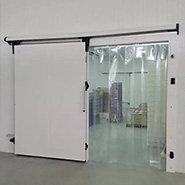
Cold Room: Standard cold room doors are generally adequate.
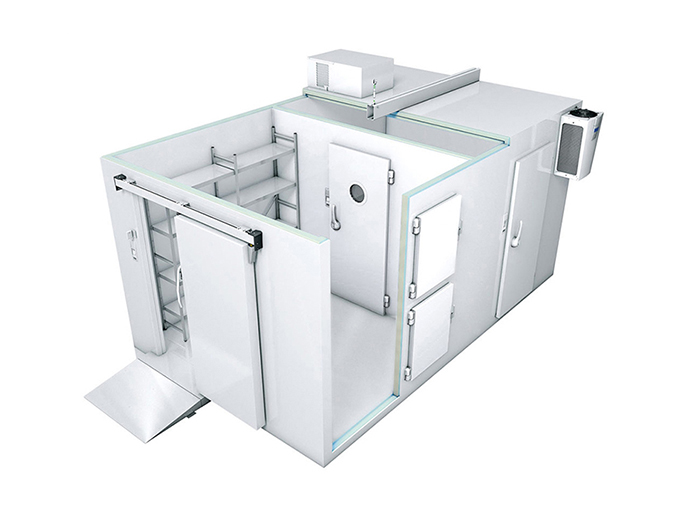
Freezer Room: Often benefits from airlock vestibules or high-speed doors to minimize cold air loss during access. Doors may have higher-quality gaskets and thresholds.
Energy Consumption:
Freezer Room: Consumes significantly more energy per cubic meter than a cold room. Maintaining sub-zero temperatures requires more powerful compressors running longer cycles against greater heat gain.
Frost Formation:
Cold Room: Frost formation on walls or products is generally not an issue.
Freezer Room: Frost accumulation inside is expected on surfaces and evaporator coils. Automatic defrost systems (heating coils or hot gas bypass) are standard to manage this.
Summary Table:
Feature | Cold Room | Freezer Room |
Temp Range | +1°C to +15°C (34°F to 59°F) | -18°C to -30°C (0°F to -22°F) |
Temp State | Above Freezing (Chilled) | Below Freezing (Frozen) |
Core Purpose | Chilling & Short-Term Preservation | Freezing & Long-Term Storage |
Applications | Fresh Produce, Dairy, Beverages | Frozen Meats, Veggies, Meals, Ice Cream |
Humidity | High (80-95%+) | Very Low |
Refrigeration | Standard System (Smaller ΔT) | Powerful System, Defrost Cycles (Large ΔT) |
Insulation | Good | Very High (Thicker Panels) |
Energy Use | Lower | Significantly Higher |
Frost/Ice | Minimal | Significant (Requires Defrosting) |
Choosing between a cold room and a freezer room depends entirely on the storage temperature your products require. Cold rooms preserve freshness above freezing, ideal for items that spoil or lose quality if frozen. Freezer rooms provide deep freezing essential for long-term storage and safety of frozen goods. Understanding these fundamental differences ensures optimal product quality, shelf life, and energy efficiency for your specific storage needs.