




A Guide to Selecting the Right Cold Storage Panels for Your Facility
 Aug 25, 2026|
 View:98
A Guide to Selecting the Right Cold Storage Panels for Your Facility
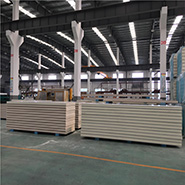
Choosing the right cold storage panels is one of the most critical decisions in constructing an efficient and reliable cold storage facility. The right panel selection directly affects energy consumption, temperature consistency, structural integrity, and total operating costs over the life of the facility. The wrong choice, however, can lead to compressor overloads, product spoilage, moisture-related failures, and expensive retrofits.
Temperature Requirements and Panel Thickness
The temperature requirement is the core factor affecting panel thickness selection. Generally, the lower the required temperature, the thicker the panel needed. For high-temperature cold storage (0°C to 10°C), 75mm to 100mm panels are typically sufficient. Medium-temperature applications (-10°C to 0°C) generally require 100mm to 120mm, while low-temperature freezers (-20°C to -10°C) need 120mm to 150mm. For ultra-low temperature environments below -30°C, panels of 150mm to 200mm or more are recommended.
Core Insulation Material
The insulation core is the most critical component of a cold room panel, as it determines thermal performance. Polyurethane (PU) panels offer excellent thermal insulation with a thermal conductivity of 0.022–0.024 W/m·K and are widely used for general-purpose cold rooms. Polyisocyanurate (PIR) provides even better fire resistance and slightly superior thermal performance, making it ideal for freezers and fire-rated applications. Expanded Polystyrene (EPS) is more budget-friendly but offers lower insulation efficiency and is best suited for dry, ambient food storage or temporary applications.
Surface Material and Coating
The surface sheet protects the panel from corrosion, wear, and microbial growth. Galvanized steel (0.4–0.6mm) with color coating is standard for most food cold rooms. Stainless steel (SS304, 0.5–0.8mm) is recommended for meat, pharmaceutical, or cleanroom cold storage where hygiene is paramount.
Joint Design and Airtightness
Panel joint design affects the room’s ability to maintain a stable temperature. Cam-lock systems provide mechanical fasteners for tight sealing and easy installation, while plug-in joints ensure continuous insulation.
Common Pitfalls to Avoid
One of the most common mistakes is undersizing panel thickness. Another frequent error is treating the core material as an afterthought—the core controls roughly 80% of the thermal performance. Buyers should also avoid focusing only on initial price, as cheaper panels may have higher thermal conductivity, leading to massive energy waste over time.
At our company, we provide high-quality cold storage panels tailored to your specific temperature requirements and operational needs. Contact us today to discuss the right solution for your project.
Recommended Products

Walk-in Cooler & Freezer, Cold Storage Warehouse

Custom Walk-in Refrigerator Cooler Freezer Food Storage Containers Cold Room

Custom Application Specific Walk in Coldroom For Sale

Cooling System Cold Storage panel Coldroom solar powered for fruits meat fish

Walk in coldroom store logistic warehouse blast freezer cold storage room for meat fish fruit and vegetable

Cold Room Price For Meat Fruits Vegetables Fish Portable Cold Rooms

Cold Storage Blast Freezer Room Walk In Cooler Storage Room For Meat

build & design Commercial Industrial Cold Storage room

Vegetable and Fruit Fresh-keeping Cold Room | Refrigerator Storage Room | Freezer Room Unit

Automatic Cold Storage Room Cool Freezing Refrigeration Freeze Cold Room


Recent News
1.Intelligent three - dimensional freezer has the following major characteristics
2019-10-282.Cold storage can be divided into the following types according to the structure of the storage body
2019-10-283.Main points of removing peculiar smell in cold storage
2019-10-284.Double - temperature cold room needs regular maintenance
2019-10-285.The process of freezing food
2019-10-286.Cold storage installation easy to be ignored
2019-10-287.Condenser action
2019-10-318.Compressor and condenser matching and selection
2019-10-319.Notes for compressor oil
2019-10-3110.Summary of common problems of Polyurethane Cold Room
2020-01-02