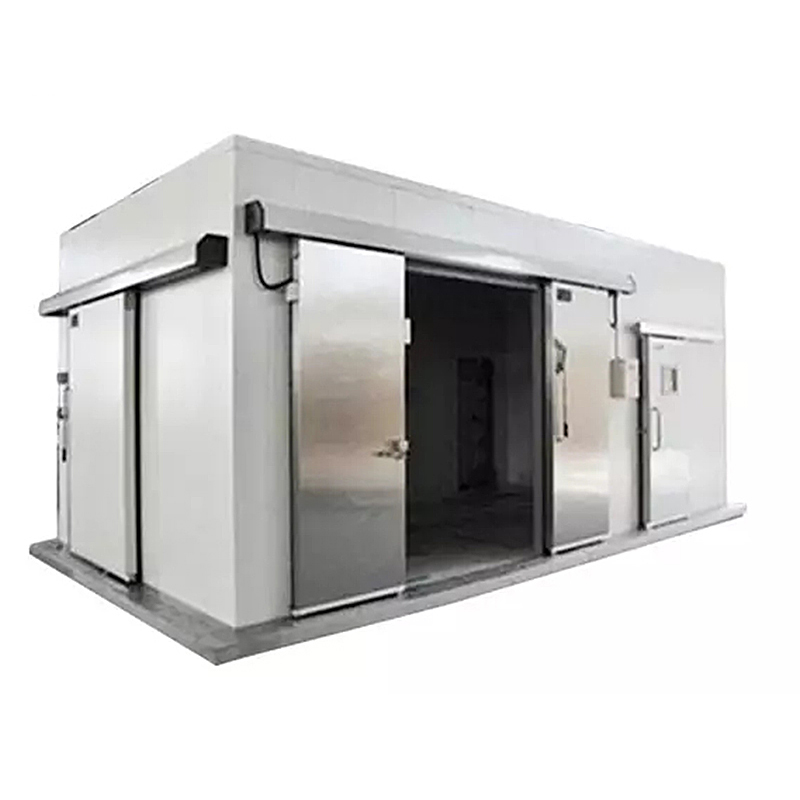
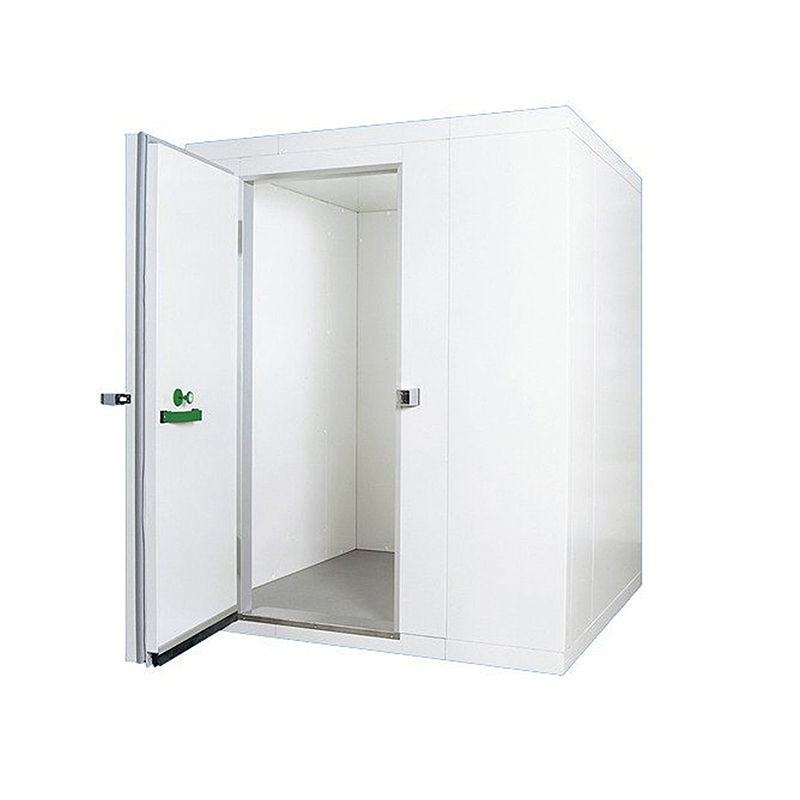
With the rapid development of the cold chain logistics and food processing industries, cold storage facilities, as crucial for storing fresh produce, pharmaceuticals, and other temperature-sensitive goods, rely heavily on the selection of compressors—the core of their refrigeration systems. The choice of compressor directly impacts the energy consumption, stability, and operational costs of cold storage. The main types of compressors on the market include reciprocating, screw, and scroll compressors, each with distinct characteristics and applications suitable for cold storage projects of varying scales and requirements. This article will conduct an in-depth comparison of the structural principles, performance parameters, and applicable scenarios of these three compressor types, providing scientific selection criteria for cold storage designers and operators.
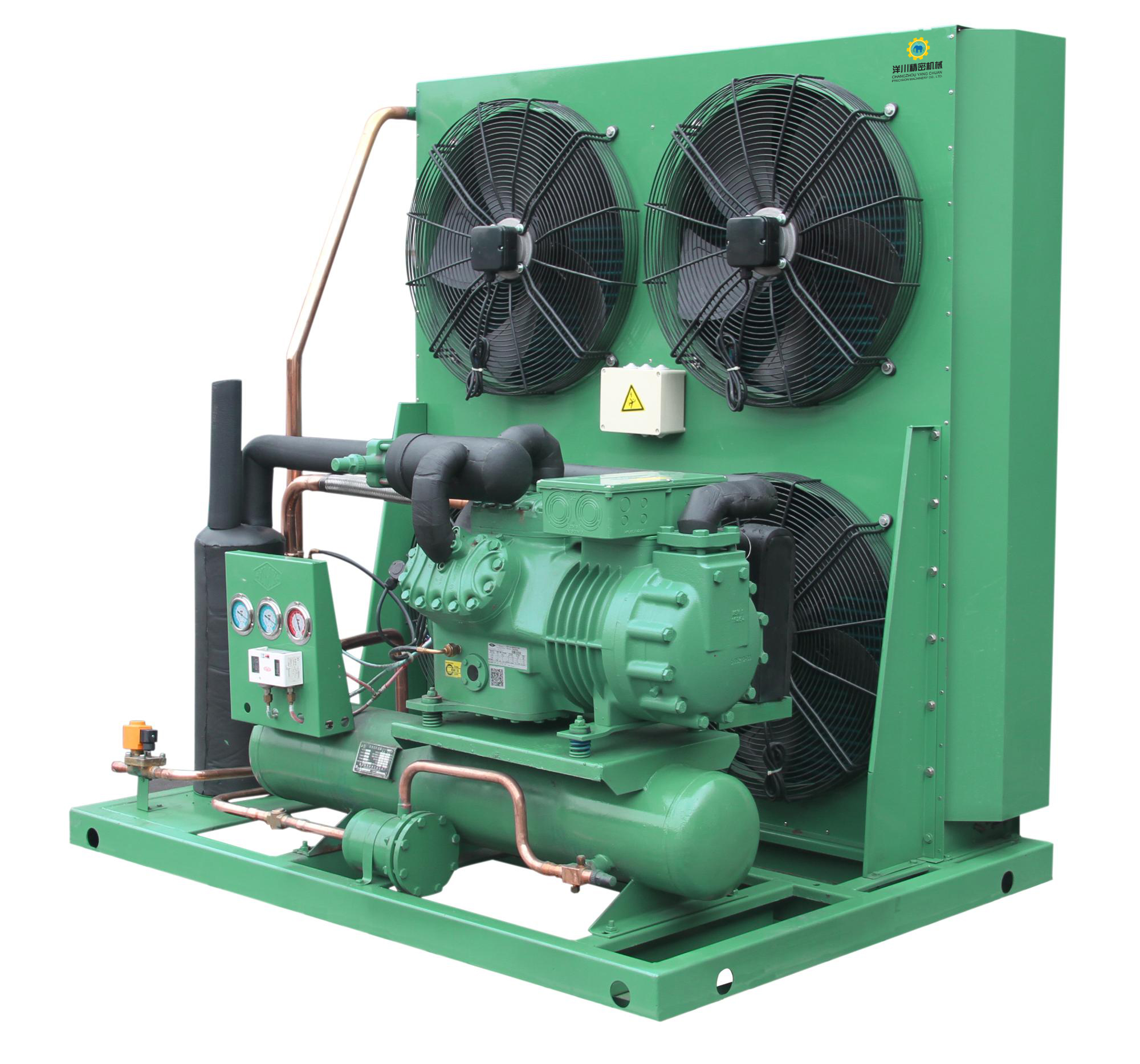
Reciprocating compressors are the most traditional type of refrigeration compressors. Their working principle is based on a crank-link mechanism that drives a piston to move back and forth within a cylinder. When the piston moves backward, the volume of the cylinder increases, the pressure decreases, and the refrigerant gas enters the cylinder through the suction valve. When the piston moves forward, the cylinder volume decreases, the gas is compressed, and the pressure rises. Once the pressure reaches a certain level, the discharge valve opens, and the high-pressure refrigerant gas is expelled. This process achieves a continuous refrigeration cycle through the coordinated operation of multiple cylinders.
Mature Technology: With a history spanning over a century, reciprocating compressors have mature technology and a well-developed manufacturing process. The market offers an abundant supply of related components, resulting in relatively low maintenance costs.
High Adaptability: By adjusting parameters such as the number of cylinders and piston stroke, they can flexibly meet different cooling capacity requirements. They are suitable for small to medium-sized cold storage facilities (usually with a cooling capacity range of 10 - 150kW).
High Pressure Ratio: They can withstand high compression ratios, making them suitable for cold storage environments with low evaporation temperatures, such as quick-freezing warehouses.
Relatively Low Efficiency: The friction loss between the piston and the cylinder is significant, and the clearance volume during the suction and discharge processes leads to a lower coefficient of performance (COP) compared to new-generation compressors.
Frequent Maintenance: Reciprocating compressors have many vulnerable parts, such as pistons, connecting rods, and valves, which require regular inspection and replacement. The maintenance cycle is short (usually a minor repair is needed every 500 - 1000 hours).
Application Scenarios: They are suitable for small commercial cold storage (such as supermarket freezers, cold storage in small food processing plants), projects with sensitivity to initial investment costs, and intermittent refrigeration scenarios that require frequent start-stop operations.
Screw compressors consist of a pair of intermeshing male and female rotors. The spiral grooves on the rotors and the inner wall of the casing form multiple variable-volume primitive volumes. As the rotors rotate, the primitive volume gradually increases at the suction end, inhaling the refrigerant gas. Then, the volume gradually decreases, compressing the gas. Finally, the high-pressure gas is discharged from the discharge end. Screw compressors are divided into single-screw and twin-screw types, with twin-screw compressors being more widely used.
High Efficiency and Energy Conservation: Using the positive displacement compression principle, with no clearance volume and a continuous compression process, screw compressors have a COP 15% - 30% higher than reciprocating compressors, especially showing significant advantages in large cold storage facilities (with a cooling capacity of over 150kW).
Stable Operation: The rotors move smoothly without reciprocating components, resulting in low vibration and noise. The maintenance cycle is long (usually maintenance is required every 5000 - 8000 hours).
Flexible Adjustment: Through slide valve adjustment technology, they can achieve stepless adjustment within a load range of 10% - 100%, adapting to the varying cooling capacity demands of cold storage at different times.
High Initial Investment: Screw compressors have a complex structure and high manufacturing precision requirements, with equipment procurement costs 20% - 50% higher than those of reciprocating compressors.
High Dependence on Lubricating Oil: A large amount of lubricating oil is required for cooling, sealing, and lubrication during the compression process. A failure in the lubricating oil system may lead to compressor damage.
Application Scenarios: They are suitable for large-scale logistics cold storage, food freezing plants, pharmaceutical cold storage, and other industrial-grade cold storage projects with high cooling capacity requirements and strict stability requirements.
Scroll compressors are composed of a fixed scroll and a rotating scroll, with the two scrolls nested with each other in an involute shape. The refrigerant gas enters from the outer periphery of the scrolls. As the rotating scroll moves, the gas is gradually compressed towards the center and then discharged from the central exhaust port. The entire compression process has no reciprocating components, only rotational motion.
High Efficiency and Low Noise: Due to the small number of moving parts and low vibration, the operating noise of scroll compressors is 10 - 15 decibels lower than that of reciprocating compressors. Their COP is comparable to that of screw compressors, making them suitable for noise-sensitive environments.
Compact Size: With a compact structure, their floor space is 30% - 50% smaller than that of reciprocating compressors with the same cooling capacity, requiring less installation space.
High Reliability: Without vulnerable parts such as valves and piston rings, they have a long service life and low maintenance costs.
Limited Cooling Capacity: Currently, scroll compressors are mainly suitable for small cold storage facilities (usually with a cooling capacity of 10 - 30kW) and have difficulty meeting the high cooling capacity requirements of large cold storage.
Weak Liquid Hammer Resistance: They are sensitive to liquid refrigerant. If liquid returns to the system, it is likely to cause compressor damage.
Application Scenarios: They are suitable for convenience store freezers, hotel kitchen cold storage, small pharmaceutical refrigeration storage, and other commercial and civil cold storage with limited space and high requirements for noise and energy efficiency.
Cooling Capacity Requirements: Calculate the required cooling capacity based on the cold storage volume, types of stored goods, door opening frequency, etc., and select a compressor within the corresponding cooling capacity range.
Coefficient of Performance (COP): In long-term operation, high-efficiency compressors can significantly reduce electricity costs. 优先选择能效等级高的机型。
Initial Investment and Maintenance Costs: Comprehensively consider expenses such as equipment procurement, installation, post-operation maintenance, and spare parts replacement to balance short-term investment and long-term returns.
Operation Stability: For cold storage with high continuity requirements (such as pharmaceutical cold storage), select compressors with low failure rates and long maintenance cycles.
| Compressor Type | Application Scenarios | Recommended Priority (★ highest) |
|---|
| Reciprocating Compressor | Small commercial cold storage, intermittent refrigeration scenarios | ★★★ |
| Screw Compressor | Large industrial cold storage, scenarios with high stability requirements | ★★★★★ |
| Scroll Compressor | Small cold storage with low noise requirements, scenarios with limited space | ★★★★ |
The selection of cold storage compressors requires comprehensive consideration of various factors, including project scale, operation costs, and energy efficiency requirements. Reciprocating compressors are suitable for small-scale scenarios due to their maturity and reliability; screw compressors have become the main choice for large cold storage facilities with their high efficiency and stability; and scroll compressors stand out in small cold storage with low noise requirements. In practical selection, it is recommended to combine the calculations and evaluations of professional design units to choose the most suitable compressor type, ensuring the efficient and stable operation of the cold storage.
The above article comprehensively compares the three main types of cold storage compressors. If you would like to explore a certain part in more depth or adjust the content direction, feel free to let me know.





 Jun 30, 2025|
 View:1326