




The Core Difference Between Reciprocating and Screw Compressors
 Nov 09, 2026|
 View:5
The Core Difference Between Reciprocating and Screw Compressors
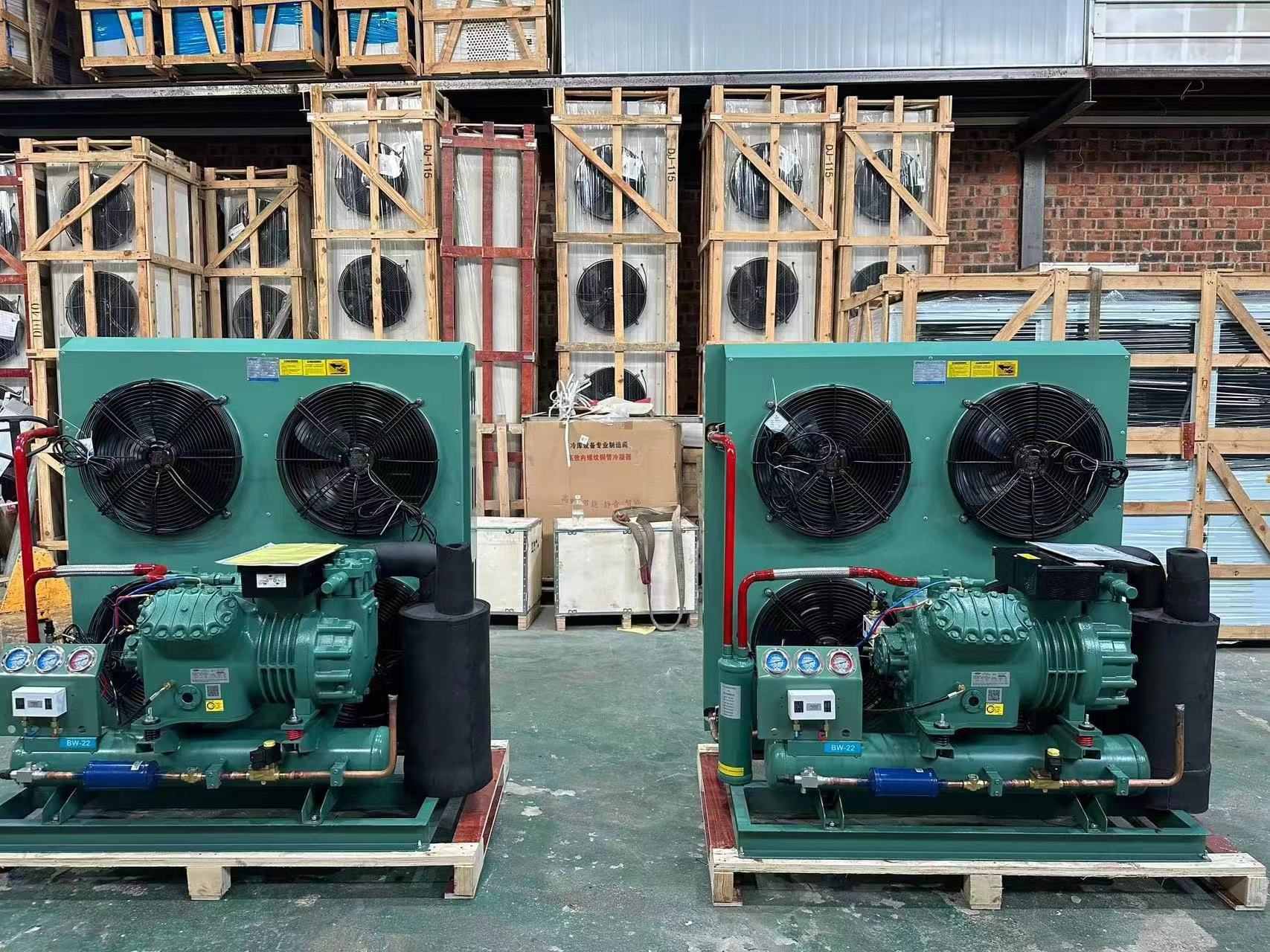
Based on your previous configuration of a "two 60HP parallel unit system," the core difference is: Screw compressors are suitable for your scenario of high cooling capacity and continuous operation; reciprocating compressors are better for small cooling capacities or high-pressure ratio intermittent applications.
For cold storage refrigeration, the key differences are mainly reflected in the following aspects:
Core Working Principle
Reciprocating Compressor: Driven by a crankshaft and connecting rod, the piston moves back and forth in the cylinder, like a bicycle pump, "sucking-compressing-discharging," with pulsating gas flow.
Screw Compressor: Driven by a pair of intermeshing male and female rotors rotating, continuously "squeezing" the refrigerant toward the discharge end, with smooth and continuous gas flow.
Cooling Capacity & Application Scenarios
Reciprocating: Single-unit power is usually smaller, and multiple units need to be paralleled for large cooling capacities. It is better at high pressure ratio, small flow scenarios, or intermittent operations with low usage frequency and limited budget.
Screw: A single unit can cover large cooling capacities (like the 60HP you mentioned), and it is the mainstream choice for large cold storage and industrial refrigeration. It is suitable for continuous 24-hour stable operation, with obvious advantages in the mainstream cooling capacity range (above approx. 22kW).
Reliability, Maintenance & Liquid Slugging Risk
Reciprocating: Many wearing parts (piston rings, valve plates, etc.), relatively frequent maintenance, greater vibration and noise. Not resistant to liquid slugging; once liquid enters, it can easily damage valve plates or pistons.
Screw: No wearing parts (no piston rings, etc.), compact structure, long overhaul cycle (up to tens of thousands of hours), smooth operation. There is clearance between rotors, making it insensitive to wet strokes and resistant to liquid slugging, which is crucial for the fluctuating loads in cold storage.
Part-Load Efficiency
Reciprocating: Under part-load conditions, efficiency drops noticeably due to the effect of clearance volume.
Screw: Usually equipped with a slide valve, allowing stepless capacity adjustment within 10%~100%. Although absolute efficiency may not always be the highest, the wide adjustment range makes the operation strategy more flexible under part-load conditions.
Cost & Noise
Reciprocating: Low initial purchase cost, but higher subsequent maintenance costs and downtime risks. High noise (approx. 80-90dB in air compression applications).
Screw: High initial investment, high machining precision requirements, and a complex oil system is needed. However, it operates smoothly with relatively lower noise (approx. 70-80dB), and the total cost of ownership may be better in the long run.

Recommended Products

Walk-in Cooler & Freezer, Cold Storage Warehouse

Custom Walk-in Refrigerator Cooler Freezer Food Storage Containers Cold Room

Custom Application Specific Walk in Coldroom For Sale

Cooling System Cold Storage panel Coldroom solar powered for fruits meat fish

Walk in coldroom store logistic warehouse blast freezer cold storage room for meat fish fruit and vegetable

Cold Room Price For Meat Fruits Vegetables Fish Portable Cold Rooms

Cold Storage Blast Freezer Room Walk In Cooler Storage Room For Meat

build & design Commercial Industrial Cold Storage room

Vegetable and Fruit Fresh-keeping Cold Room | Refrigerator Storage Room | Freezer Room Unit

Automatic Cold Storage Room Cool Freezing Refrigeration Freeze Cold Room


Recent News
1.Intelligent three - dimensional freezer has the following major characteristics
2019-10-282.Cold storage can be divided into the following types according to the structure of the storage body
2019-10-283.Main points of removing peculiar smell in cold storage
2019-10-284.Double - temperature cold room needs regular maintenance
2019-10-285.The process of freezing food
2019-10-286.Cold storage installation easy to be ignored
2019-10-287.Condenser action
2019-10-318.Compressor and condenser matching and selection
2019-10-319.Notes for compressor oil
2019-10-3110.Summary of common problems of Polyurethane Cold Room
2020-01-02